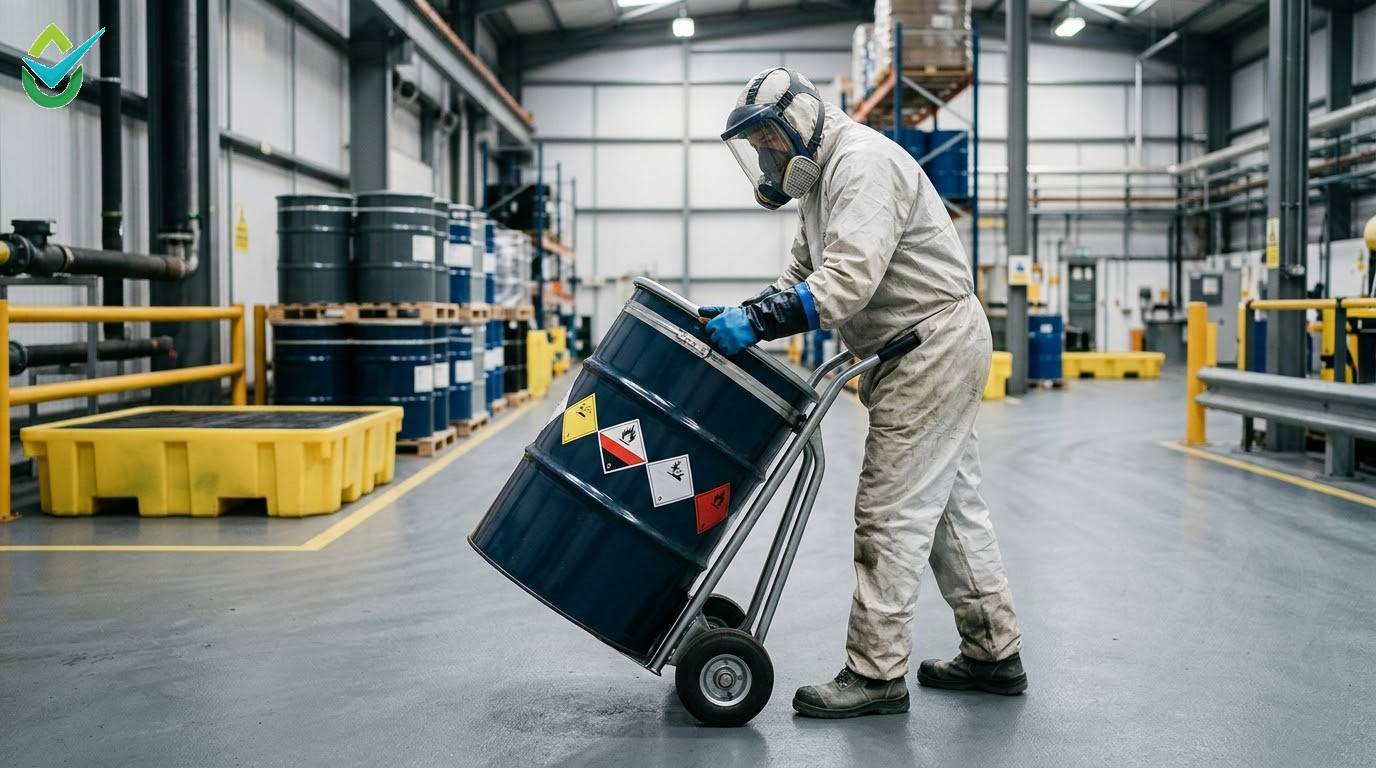
When a drum of spent acid is taking up space in your workshop or lab, neutralising it yourself can look like the quickest fix. In reality, DIY neutralisation is one of the most common acid disposal mistakes, and one of the riskiest.
Is It Safe to Neutralise Acid On-Site?
Not without the right training, equipment and controls. Neutralisation is a chemical reaction, and it can release heat, fumes and splashing very quickly, especially with concentrated acids. Adding the wrong reagent, or adding it too fast, can cause violent reactions and toxic vapours. Splashes can also cause serious chemical burns. Even a “successful” attempt can leave you with a solution that is still unsafe to handle.
Does Neutralised Acid Count as Non-Hazardous Waste?
Not automatically. Neutralising changes the pH, but the liquid may still contain dissolved metals, residues or other contaminants that keep it classified as hazardous in Victoria. Pouring it down the drain can still breach trade waste and EPA requirements, a belief we unpack in our post on common chemical disposal myths.
What Are the Risks of Improper Acid Disposal?
Mishandled acid can injure staff, corrode pipes and equipment, and contaminate soil or waterways. It can also expose your business to regulatory action and costly clean-ups. Using a licensed collector protects your team, your site and your reputation, while giving you the documentation to prove your waste was handled correctly.
What Is the Safest Way to Handle Acid Disposal?
Leave it to licensed professionals. Keep the acid in a compatible, clearly labelled container, store it away from bases, solvents and metals, and book a licensed collector. EPA Victoria’s waste classification guidelines explain how to identify what you’re holding, and our hazardous waste disposal Melbourne team can collect, transport and treat corrosive waste compliantly.
Not sure what’s in your storage area? Contact MD Recovery for a quick assessment and quote.